Benefits of Hiring a UI/UX Design Agency
The Agency vs. In-House Question
Startups and growing companies face this decision regularly: build a design capability in-house, or engage a design agency for specific projects or ongoing partnership. The answer depends on where you are in your product lifecycle, how stable your design requirements are, and what kind of design work actually creates the most value for your company.
Here's an honest breakdown.
When an Agency Delivers More Value
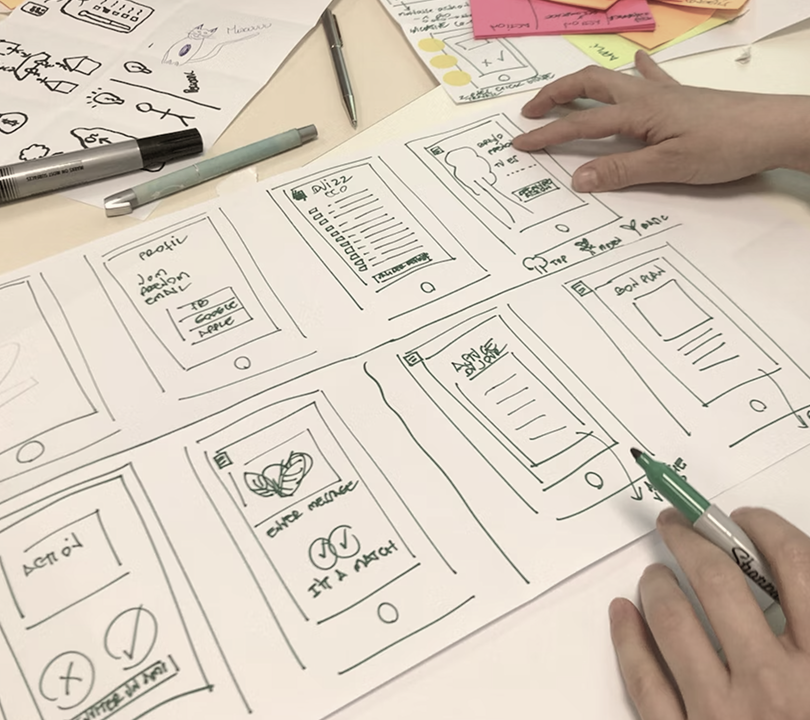
Early-stage product design. Before product-market fit, your design needs are intense, variable, and experimental. You need someone who can run discovery, build prototypes, test with users, and pivot quickly. A full-time in-house designer hired before PMF will either be underutilised during slow periods or overwhelmed during sprint phases. An agency team scales with the work.
Specialised expertise. Enterprise-grade accessibility audits. Health tech UX research. Mobile-first design systems. These specialisations are hard to hire for and expensive to develop in-house. An agency that has done this work before brings the knowledge immediately.
Objective outside perspective. In-house designers get close to the product. They absorb the assumptions, accept the constraints, and stop questioning things that should be questioned. A fresh external team doesn't have those assumptions. The design audit value and fresh-eyes critique that agencies provide is genuinely hard to replicate internally.
Faster execution on defined scope. If you have a well-defined project — a design system, a product redesign, a new feature's UX — an agency with a dedicated team can execute faster than building the same capacity in-house. No ramp time for the project, no context switching from other internal priorities.
Cost efficiency at lower design volume. A senior designer in a major market costs $120,000-$180,000 per year in salary, before benefits and overhead. For companies that need good design but not full-time design hours, an agency relationship is significantly more cost-efficient.
When In-House Design Makes More Sense
Post-PMF, scaling phase. Once you've found PMF and are scaling aggressively, design becomes a continuous, deeply integrated function. In-house designers who live and breathe the product, attend sprint planning, and have deep context on user research build design quality that agencies working at arm's length can't match.
When design is a core competitive advantage. If your product differentiates on design — the experience IS the product — you need design capacity that's fully embedded in your team. Apple doesn't design with agencies.
When continuity is critical. Agency relationships have transitions: account managers change, team compositions shift, project handoffs happen. For design work that requires deep, sustained continuity, in-house is more reliable.
What the Best Companies Actually Do
The best-designed products don't choose between agency and in-house — they use both strategically. Agency for foundational work (brand identity, design system, major redesigns), in-house for continuous product evolution. The mix shifts as the company grows.
What determines the right mix isn't company size — it's the nature of the design work at any given moment. Understand the work, then figure out the right resourcing for it.